Friday, September 30, 2011

The 2009 Import and Export Market for Fresh or Chilled Edible Pork Offal in Latin America

The 2009 Import and Export Market for Fresh or Chilled Edible Pork Offal in Latin America Review

See more picture


On the demand side, exporters and strategic planners approaching the market in Latin America face a number of questions. Which countries are supplying fresh or chilled edible pork offal to Latin America? What is the dollar value of these imports? How much do the imports of fresh or chilled edible pork offal vary from one country to another in Latin America? Do exporters serving the market in Latin America have similar market shares across the importing countries? On the supply side, Latin America also sells to the international market of fresh or chilled edible pork offal. Which countries in Latin America supply the most exports of fresh or chilled edible pork offal? Which countries are buying their exports? What is the value of these exports and which countries are the largest buyers?

This report was created for strategic planners, international marketing executives and import/export managers who are concerned with the market for fresh or chilled edible pork offal in Latin America. With the globalization of this market, managers can no longer be contented with a local view. Nor can managers be contented with out-of-date statistics that appear several years after the fact. I have developed a methodology, based on macroeconomic and trade models, to estimate the market for fresh or chilled edible pork offal for those countries serving Latin America via exports or supplying from Latin America via imports. We do so for the current year based on a variety of key historical indicators and econometric models.


Check price now


Related Products


Customer Reviews


Sep 30, 2011 17:45:12

Thursday, September 29, 2011

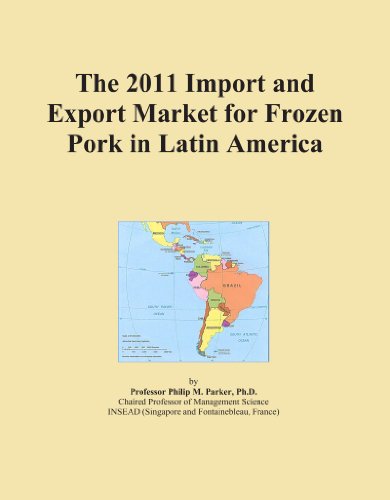
The 2011 Import and Export Market for Frozen Pork in Latin America

The 2011 Import and Export Market for Frozen Pork in Latin America Review


See more picture


On the demand side, exporters and strategic planners approaching the market in Latin America face a number of questions. Which countries are supplying frozen pork to Latin America? What is the dollar value of these imports? How much do the imports of frozen pork vary from one country to another in Latin America? Do exporters serving the market in Latin America have similar market shares across the importing countries? On the supply side, Latin America also sells to the international market of frozen pork. Which countries in Latin America supply the most exports of frozen pork? Which countries are buying their exports? What is the value of these exports and which countries are the largest buyers?

This report was created for strategic planners, international marketing executives and import/export managers who are concerned with the market for frozen pork in Latin America. With the globalization of this market, managers can no longer be contented with a local view. Nor can managers be contented with out-of-date statistics that appear several years after the fact. I have developed a methodology, based on macroeconomic and trade models, to estimate the market for frozen pork for those countries serving Latin America via exports or supplying from Latin America via imports. We do so for the current year based on a variety of key historical indicators and econometric models.

In what follows, Chapter 2 begins by summarizing where Latin America fits into the world market for imported and exported frozen pork. The total level of imports and exports on a worldwide basis, and those for Latin America in particular, is based on a model which aggregates across over 150 key country markets and projects these to the current year. From there, each country represents a percent of the world market. This market is served from a number of competitive countries of origin. Based on both demand- and supply-side dynamics, market shares by country of


Check price now


Related Products


Customer Reviews


Sep 29, 2011 13:39:03

Wednesday, September 28, 2011

CORPORATE WELFARE: PORK FOR ALL.(Brief Article): An article from: Dollars & Sense

CORPORATE WELFARE: PORK FOR ALL.(Brief Article): An article from: Dollars & Sense Review


See more picture


This digital document is an article from Dollars & Sense, published by Economic Affairs Bureau on May 1, 2000. The length of the article is 862 words. The page length shown above is based on a typical 300-word page. The article is delivered in HTML format and is available in your Amazon.com Digital Locker immediately after purchase. You can view it with any web browser.

Citation Details
Title: CORPORATE WELFARE: PORK FOR ALL.(Brief Article)
Author: Abby Scher
Publication:Dollars & Sense (Newsletter)
Date: May 1, 2000
Publisher: Economic Affairs Bureau
Page: 11

Article Type: Brief Article

Distributed by Thomson Gale


Check price now


Related Products


Customer Reviews


Sep 28, 2011 12:18:36

Monday, September 26, 2011

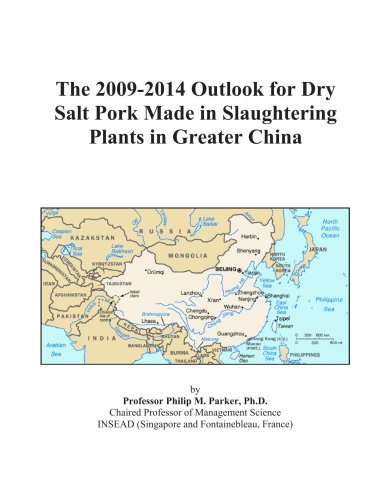
The 2009-2014 Outlook for Dry Salt Pork Made in Slaughtering Plants in Greater China

The 2009-2014 Outlook for Dry Salt Pork Made in Slaughtering Plants in Greater China Review


See more picture


This econometric study covers the latent demand outlook for dry salt pork made in slaughtering plants across the regions of Greater China, including provinces, autonomous regions (Guangxi, Nei Mongol, Ningxia, Xinjiang, Xizang - Tibet), municipalities (Beijing, Chongqing, Shanghai, and Tianjin), special administrative regions (Hong Kong and Macau), and Taiwan (all hereafter referred to as "regions"). Latent demand (in millions of U.S. dollars), or potential industry earnings (P.I.E.) estimates are given across some 1,100 cities in Greater China. For each major city in question, the percent share the city is of the region and of Greater China is reported. Each major city is defined as an area of "economic population", as opposed to the demographic population within a legal geographic boundary. For many cities, the economic population is much larger that the population within the city limits; this is especially true for the cities of the Western regions. For the coastal regions, cities which are close to other major cities or which represent, by themselves, a high percent of the regional population, actual city-level population is closer to the economic population (e.g. in Beijing). Based on this "economic" definition of population, comparative benchmarks allow the reader to quickly gauge a city's marketing and distribution value vis-a-vis others. This report does not discuss the specific players in the market serving the latent demand, nor specific details at the product level. The study also does not consider short-term cyclicalities that might affect realized sales. The study, therefore, is strategic in nature, taking an aggregate and long-run view, irrespective of the players or products involved.


Check price now


Related Products


Customer Reviews


Sep 26, 2011 21:25:03

Sunday, September 25, 2011

The 2009-2014 Outlook for Pork Made in Slaughtering Plants in Japan

The 2009-2014 Outlook for Pork Made in Slaughtering Plants in Japan Review


See more picture


This econometric study covers the latent demand outlook for pork made in slaughtering plants across the prefectures and cities of Japan. Latent demand (in millions of U.S. dollars), or potential industry earnings (P.I.E.) estimates are given across some 1,000 cities in Japan. For each city in question, the percent share the city is of it's prefecture and of Japan is reported. These comparative benchmarks allow the reader to quickly gauge a city vis-a-vis others. This statistical approach can prove very useful to distribution and/or sales force strategies. Using econometric models which project fundamental economic dynamics within each prefecture and city, latent demand estimates are created for pork made in slaughtering plants. This report does not discuss the specific players in the market serving the latent demand, nor specific details at the product level. The study also does not consider short-term cyclicalities that might affect realized sales. The study, therefore, is strategic in nature, taking an aggregate and long-run view, irrespective of the players or products involved.

This study does not report actual sales data (which are simply unavailable, in a comparable or consistent manner in virtually all of the cities in Japan). This study gives, however, my estimates for the latent demand, or the P.I.E., for pork made in slaughtering plants in Japan. It also shows how the P.I.E. is divided and concentrated across the cities and regional markets of Japan. For each prefecture, I also show my estimates of how the P.I.E. grows over time. In order to make these estimates, a multi-stage methodology was employed that is often taught in courses on strategic planning at graduate schools of business.


Check price now


Related Products


Customer Reviews


Sep 25, 2011 15:11:04

Saturday, September 24, 2011

The 2009 Import and Export Market for Frozen Pork in South Africa

The 2009 Import and Export Market for Frozen Pork in South Africa Review


See more picture


On the demand side, exporters and strategic planners focusing on frozen pork in South Africa face a number of questions. Which countries are supplying frozen pork to South Africa? How important is South Africa compared to others in terms of the entire global and regional market? How much do the imports of frozen pork vary from one country of origin to another in South Africa? On the supply side, South Africa also exports frozen pork. Which countries receive the most exports from South Africa? How are these exports concentrated across buyers? What is the value of these exports and which countries are the largest buyers?

This report was created for strategic planners, international marketing executives and import/export managers who are concerned with the market for frozen pork in South Africa. With the globalization of this market, managers can no longer be contented with a local view. Nor can managers be contented with out-of-date statistics which appear several years after the fact. I have developed a methodology, based on macroeconomic and trade models, to estimate the market for frozen pork for those countries serving South Africa via exports, or supplying from South Africa via imports. It does so for the current year based on a variety of key historical indicators and econometric models.

In what follows, Chapter 2 begins by summarizing where South Africa fits into the world market for imported and exported frozen pork. The total level of imports and exports on a worldwide basis, and those for South Africa in particular, is estimated using a model which aggregates across over 150 key country markets and projects these to the current year. From there, each country represents a percent of the world market. This market is served from a number of competitive countries of origin. Based on both demand- and supply-side dynamics, market shares by country of origin are then calculated across each country market destination. These


Check price now


Related Products


Customer Reviews


Sep 24, 2011 11:57:04

Thursday, September 22, 2011

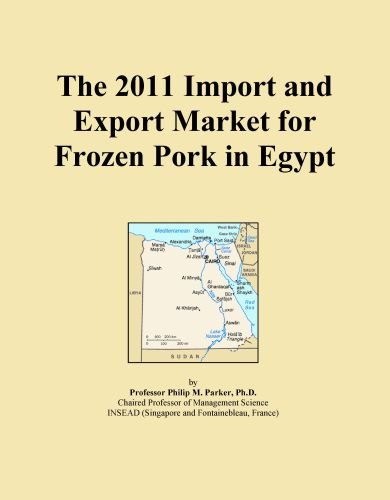
The 2011 Import and Export Market for Frozen Pork in Egypt

The 2011 Import and Export Market for Frozen Pork in Egypt Review


See more picture


On the demand side, exporters and strategic planners focusing on frozen pork in Egypt face a number of questions. Which countries are supplying frozen pork to Egypt? How important is Egypt compared to others in terms of the entire global and regional market? How much do the imports of frozen pork vary from one country of origin to another in Egypt? On the supply side, Egypt also exports frozen pork. Which countries receive the most exports from Egypt? How are these exports concentrated across buyers? What is the value of these exports and which countries are the largest buyers?

This report was created for strategic planners, international marketing executives and import/export managers who are concerned with the market for frozen pork in Egypt. With the globalization of this market, managers can no longer be contented with a local view. Nor can managers be contented with out-of-date statistics which appear several years after the fact. I have developed a methodology, based on macroeconomic and trade models, to estimate the market for frozen pork for those countries serving Egypt via exports, or supplying from Egypt via imports. It does so for the current year based on a variety of key historical indicators and econometric models.

In what follows, Chapter 2 begins by summarizing where Egypt fits into the world market for imported and exported frozen pork. The total level of imports and exports on a worldwide basis, and those for Egypt in particular, is estimated using a model which aggregates across over 150 key country markets and projects these to the current year. From there, each country represents a percent of the world market. This market is served from a number of competitive countries of origin. Based on both demand- and supply-side dynamics, market shares by country of origin are then calculated across each country market destination. These shares lead to a volume of import and export values for each country and are aggregated to regional and world totals. In doing so, we are able to obtain maximum likelihood estimates of both the value of each market and the share that Egypt is likely to receive this year. From these figures, rankings are calculated to allow managers to prioritize Egypt compared to other major country markets. In this way, all the figures provided in this report are forecasts that can be combined with internal information sources for strategic planning purposes.


Check price now


Related Products


Customer Reviews


Sep 23, 2011 07:28:04

Wednesday, September 21, 2011

The 2011 Report on Boiled Ham, Barbecue Pork, and Other Cooked Pork Made in Slaughtering Plants Excluding Canned Meats and Sausage: World Market Segmentation by City

The 2011 Report on Boiled Ham, Barbecue Pork, and Other Cooked Pork Made in Slaughtering Plants Excluding Canned Meats and Sausage: World Market Segmentation by City Review


See more picture


This report was created for global strategic planners who cannot be content with traditional methods of segmenting world markets. With the advent of a "borderless world", cities become a more important criteria in prioritizing markets, as opposed to regions, continents, or countries. This report covers the top 2000 cities in over 200 countries. It does so by reporting the estimated market size (in terms of latent demand) for each major city of the world. It then ranks these cities and reports them in terms of their size as a percent of the country where they are located, their geographic region (e.g. Africa, Asia, Europe, Middle East, North America, Latin America), and the total world market.

In performing various economic analyses for its clients, I have been occasionally asked to investigate the market potential for various products and services across cities. The purpose of the studies is to understand the density of demand within a country and the extent to which a city might be used as a point of distribution within its region. From an economic perspective, however, a city does not represent a population within rigid geographical boundaries. To an economist or strategic planner, a city represents an area of dominant influence over markets in adjacent areas. This influence varies from one industry to another, but also from one period of time to another.

In what follows, I summarize the economic potential for the world's major cities for "boiled ham, barbecue pork, and other cooked pork made in slaughtering plants excluding canned meats and sausage" for the year 2011. The goal of this report is to report my findings on the real economic potential, or what an economist calls the latent demand, represented by a city when defined as an area of dominant influence. The reader needs to realize that latent demand may or may not represent real sales.


Check price now


Related Products


Customer Reviews


Sep 22, 2011 06:34:06

Tuesday, September 20, 2011

The 2011 Import and Export Market for Frozen Edible Pork Offal in Latvia

The 2011 Import and Export Market for Frozen Edible Pork Offal in Latvia Review


See more picture


On the demand side, exporters and strategic planners focusing on frozen edible pork offal in Latvia face a number of questions. Which countries are supplying frozen edible pork offal to Latvia? How important is Latvia compared to others in terms of the entire global and regional market? How much do the imports of frozen edible pork offal vary from one country of origin to another in Latvia? On the supply side, Latvia also exports frozen edible pork offal. Which countries receive the most exports from Latvia? How are these exports concentrated across buyers? What is the value of these exports and which countries are the largest buyers?

This report was created for strategic planners, international marketing executives and import/export managers who are concerned with the market for frozen edible pork offal in Latvia. With the globalization of this market, managers can no longer be contented with a local view. Nor can managers be contented with out-of-date statistics which appear several years after the fact. I have developed a methodology, based on macroeconomic and trade models, to estimate the market for frozen edible pork offal for those countries serving Latvia via exports, or supplying from Latvia via imports. It does so for the current year based on a variety of key historical indicators and econometric models.

In what follows, Chapter 2 begins by summarizing where Latvia fits into the world market for imported and exported frozen edible pork offal. The total level of imports and exports on a worldwide basis, and those for Latvia in particular, is estimated using a model which aggregates across over 150 key country markets and projects these to the current year. From there, each country represents a percent of the world market. This market is served from a number of competitive countries of origin. Based on both demand- and supply-side dynamics, market shares by country of origin are then calculated across each country market destination. These shares lead to a volume of import and export values for each country and are aggregated to regional and world totals. In doing so, we are able to obtain maximum likelihood estimates of both the value of each market and the share that Latvia is likely to receive this year. From these figures, rankings are calculated to allow managers to prioritize Latvia compared to other major country markets. In this way, all the figures provided in this report are forecasts that can be combined with internal information sources for strategic planning purposes.


Check price now


Related Products


Customer Reviews


Sep 21, 2011 03:55:07

Monday, September 19, 2011

The 2009 World Forecasts of Dried, Salted, or Smoked Pork Shoulders and Shoulder Cuts with Bones Export Supplies

The 2009 World Forecasts of Dried, Salted, or Smoked Pork Shoulders and Shoulder Cuts with Bones Export Supplies Review


See more picture


This report was created for strategic planners, international marketing executives and export managers whose primary concern is the world market for dried, salted, or smoked pork shoulders and shoulder cuts with bones. With the globalization of this market, managers can no longer be contented with a local view. Nor can managers be contented with out-of-date statistics that appear several years after the fact. I have developed a methodology, based on macroeconomic and trade models, to estimate the market for dried, salted, or smoked pork shoulders and shoulder cuts with bones for those firms serving the world via exports and foreign direct investment. It does so for the current year based on a variety of key historical indicators and econometric models.


Check price now


Related Products


Customer Reviews


Sep 19, 2011 14:11:38